

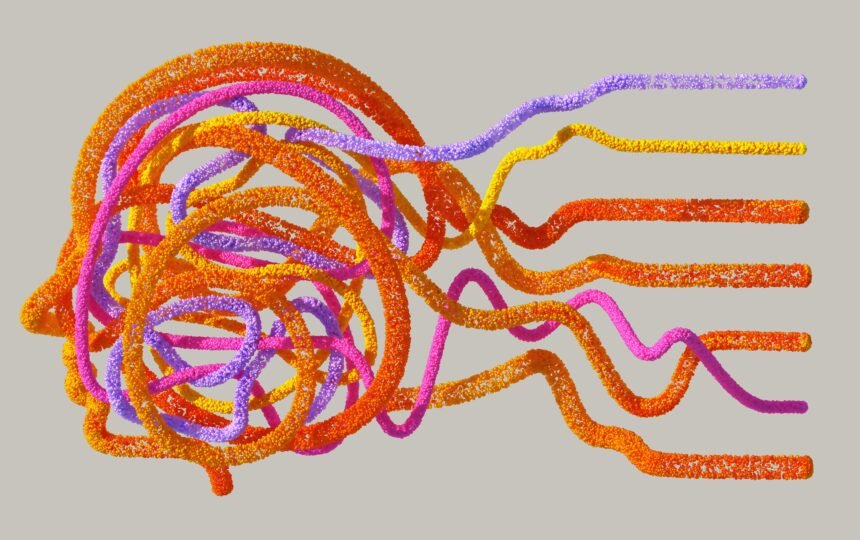
You feel like you are reacting to the world in real time. However, your brain is always slightly ahead. It predicts what will happen before it fully happens. This is not intuition or guesswork. It is basic neuroscience. The brain is built to anticipate. It does not wait, but prepares. So perception is not only about what is happening now. It is about what is likely next.
The Brain does not Work in the Present
What you call “now” is already processed.
By the time you become aware of something, the brain has already:
- predicted the input
- compared it with expectation
- adjusted the result
So experience is slightly delayed and heavily pre-structured. Neuroscience shows there is no raw moment of perception. Only processed output appears in awareness.
Prediction Comes First
The brain constantly generates predictions. Before a sound is heard, it expects patterns. Then, before movement happens, it anticipates direction. Afterwards, when a word is understood, it guesses its meaning.
This happens automatically. There is no pause between events and interpretation. Prediction comes first. Sensory input comes second.
Why the Brain Works this Way
The world is too fast and too complex for slow processing. So the brain uses shortcuts. Instead of analyzing everything from zero, it reuses past patterns. This reduces effort. It increases speed, and improves survival response.
From a neuroscience perspective, prediction is a built-in efficiency system.
The Delay You Never Notice
Signals from the outside world take time to reach the brain. Processing takes additional time. Yet perception feels immediate. This is because the brain fills gaps using prediction. So instead of waiting, it completes the picture early. What you experience is a finished version, not the raw stream.
Neuroscience describes this as constructive timing.
How the Brain Builds the Future
The brain not only responds. It simulates, and runs internal models of what is likely to happen next.
These models are based on:
- memory
- patterns
- context
- recent input
So even before events unfold, the brain prepares interpretations. This is why you can catch a ball or finish a sentence. The system is already ahead of its time.
Prediction Error Keeps it Honest
Predictions are not always correct. When reality differs, a mismatch occurs. This is called prediction error. The brain then updates its model.
This correction is constant.
Without it, the system would drift away from reality. So prediction is balanced by feedback. Neuroscience sees this loop as the core of learning.
Attention Decides what Matters
The brain cannot predict everything equally.
So it prioritizes. Attention selects which signals get importance. Strong or relevant input gets processed deeply. Weak or irrelevant input gets ignored. This means prediction is not uniform. It is guided by focus.
Neuroscience shows attention acts like a control system for prediction strength.
Why You React before You Think
Sometimes you react instantly. You move before you consciously decide. This is because prediction has already prepared a response. Conscious awareness comes after preparation. So action often starts before thought catches up.
Neuroscience links this to fast predictive loops in motor systems.
Read here to know more: Mental Health: Never Mistake it for a Trend!
Illusions Reveal the System
Optical illusions are not random errors. They are prediction conflicts. The brain expects one pattern. The input shows another. Instead of fully correcting immediately, the prediction can dominate. So perception shifts away from physical truth. This reveals how strongly prediction shapes experience.
Hallucination and Overprediction
In some cases, the brain predicts without enough input. The internal model becomes dominant. So experience is generated without external confirmation. This is seen in hallucinations. It shows that perception can be internally driven. Neuroscience explains this as an imbalance between prediction and sensory correction.
Why You Feel “Present”
Even though prediction is ahead, experience feels current. This is because the brain constantly updates in small steps. It smooths time into a continuous flow.
So you never notice the gaps.
You only feel continuity. The present moment is a constructed alignment of prediction and input.
Emotion Shapes Prediction
Emotion changes forecasting. Fear sharpens threat prediction. Calm reduces urgency. Hope shifts expected outcomes. So, emotional state directly affects perception.
Two people can see the same event differently. Neuroscience shows emotion and prediction share the same processing systems.
Mental States and Future Bias
In anxiety, the brain over-predicts danger. In depression, it over-predicts negative outcomes. Plus, in both cases, future expectations become heavy. This changes how present events are interpreted. Input remains the same. Prediction changes meaning. Neuroscience describes this as biased forecasting loops.
Efficiency Over Accuracy
The brain does not aim for perfect truth. It aims for useful action. A fast prediction is better than a slow analysis. So the system accepts small errors if speed improves survival.
This is why perception is slightly compressed and simplified.
Neuroscience frames this as adaptive efficiency.
Do We ever Experience the Exact Present?
Not directly. By the time awareness forms, processing is already complete. So experience always contains a built-in prediction layer. There is no unfiltered moment. Only interpreted continuity. Neuroscience suggests perception is always one step ahead of raw input.
Conclusion
The brain does not wait for reality.
It predicts it. Additionally, it also builds expectations before events fully occur. Additionally, it also corrects those expectations when needed. This is why experience feels smooth and immediate. However, underneath that feeling is constant forecasting. Neuroscience shows that perception is not just reaction.
It is anticipation.
The brain thinks ahead of time so you can act in time.