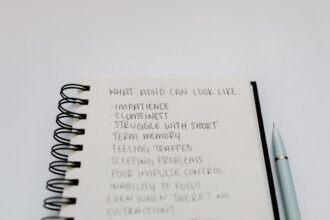


Forgetting an appointment. Staring at an inbox and not knowing where to start. Putting off a report for the third day in a row. A desk that’s somehow always a mess. Bouncing between five half-finished things instead of one done thing. On paper, these look like separate problems. Maybe even separate character flaws, if you’re being hard on yourself about it. But if you’re an adult with ADHD, there’s a decent chance they all come from the same place: executive functioning. ADHD executive function is one of those terms that sounds clinical but actually explains a lot — namely, why ADHD is about so much more than just “trouble paying attention.”
ADHD can show up as difficulty planning, organizing, prioritizing, managing time, staying focused, and actually following through once you’ve started something.
Okay, But What Is Executive Function, Really?
Think of executive functions as the brain’s project manager — the part in charge of turning intentions into action.
It’s involved in:
- Planning
- Organizing
- Prioritizing
- Getting started
- Managing time
- Holding attention steady
- Switching gears between tasks
- Keeping track of progress
- Actually finishing things
When that internal project manager is a little understaffed, even ordinary tasks can end up feeling like way more work than they should.
What This Actually Looks Like in a Day
Here’s a normal-ish workday: five new emails, a 10 a.m. meeting, a report due by noon, and another project quietly waiting in the wings for the afternoon.
None of that is hard to understand. Nobody’s confused about what a “report” is.
The hard part is everything underneath it:
Which thing do you tackle first?
Realistically, how long is each of these going to take?
When do you actually sit down and start the report?
What’s the backup plan if the meeting runs long?
How do you mentally close one tab and open the next without losing the thread?
That’s not laziness or a lack of intelligence. That’s executive function doing a lot of invisible work — or struggling to.
A To-Do List Isn’t the Same as a Plan
If you’ve got ADHD organization struggles, you’ve probably already tried planners, apps, sticky notes — the works.
The problem usually isn’t the list itself. It’s when the list turns into twenty-three things with no clear order, and looking at it feels worse than not making one at all.
What tends to help more is picking just a few things — the ones that actually matter today.
Something like:
- Finish the client email.
- Get ready for the meeting.
- Write the first section of the report.
Three things. Not twenty-three. The point isn’t capturing everything — it’s making the next move obvious.
Why Time Feels So Slippery
ADHD time management runs into a lot of the same executive-function trouble.
Guessing how long something will take, keeping deadlines in mind, moving cleanly from one task to the next — none of it comes automatically when this part of the brain is under strain.
This is where outsourcing to something outside your own head really pays off.
A calendar that pings you. An alarm. A visible countdown timer. A recurring reminder that doesn’t rely on you remembering to remember. None of it is a crutch — it’s just handing the job to something more reliable than working memory on a bad day.
Switching Tasks Is Its Own Skill
Jumping from one thing to another sounds simple. It isn’t always.
You’re halfway through an email, a notification pops up, you glance at it, reply, open another message — and somewhere in there, the original email just… stops existing. Not forgotten exactly. Just quietly abandoned.
Cutting down on interruptions helps more than it sounds like it would. Turning off notifications during a focus block, closing extra tabs, putting the phone in another room — small stuff, but it protects the thread you’re trying to hold onto.
Structure Isn’t the Enemy
A predictable routine takes a bunch of tiny decisions off the table before they ever have to be made.
The CDC actually lists routines and organizational strategies as go-to behavioral approaches for managing ADHD — this isn’t just a productivity-blog talking point.
That doesn’t mean life needs to run like a military schedule. Structure can bend.
A morning routine, for example, might just be “shower, coffee, check calendar” in that order — enough consistency to skip the decision-making, with plenty of room for the day to go sideways after that.
ADHD Isn’t Just About Focus
There’s a persistent myth that ADHD is just “can’t sit still” or “can’t concentrate.”
In adults, it often looks more like disorganization, chronic lateness, trouble figuring out what matters most, unfinished projects piling up, restlessness, and a lower tolerance for stress than most people seem to have.
Looking at all of this through the lens of ADHD executive function makes it click.
Someone can know exactly what they need to do — no confusion there at all — and still get stuck on the part where knowing turns into doing.
Getting Support That Actually Fits
Not every organized-desk failure means ADHD. Executive-function struggles show up for plenty of reasons.
But if attention, organization, time management, or just finishing things has been a real, ongoing problem — one that’s affecting work or daily life — it’s worth talking to a healthcare professional to figure out what’s actually going on.
For adults with ADHD, the goal was never perfect organization. Nobody’s chasing a spotless planner here.
It’s finding systems that work with how your brain actually operates, instead of fighting against it.
Sometimes trying harder isn’t the answer.
Building better support around yourself is.